Info Detail
Fakultas Ilmu-ilmu Kesehatan

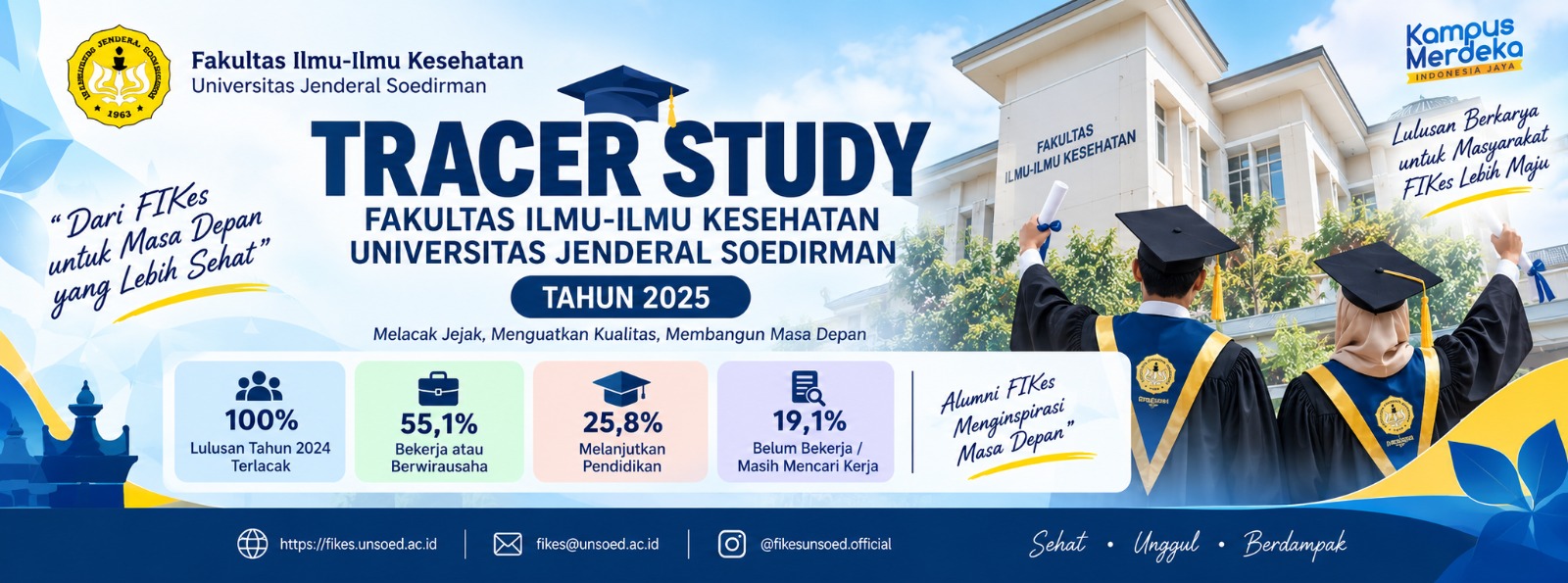
Purwokerto – Fakultas Ilmu-Ilmu Kesehatan (FIKes) Universitas Jenderal Soedirman (UNSOED) telah melaksanakan Tracer Study tahun 2025 untuk menelusuri perkembangan lulusan tahun 2024 sekaligus mengevaluasi relevansi pendidikan dengan kebutuhan dunia kerja.
Pelaksanaan Tracer Study tahun 2025 berhasil menjangkau 100% lulusan tahun 2024, dengan total 648 responden yang berasal dari jenjang S1, Profesi, dan S2. Tingginya tingkat partisipasi tersebut memberikan gambaran yang komprehensif mengenai kondisi lulusan setelah menyelesaikan pendidikan di FIKes UNSOED.
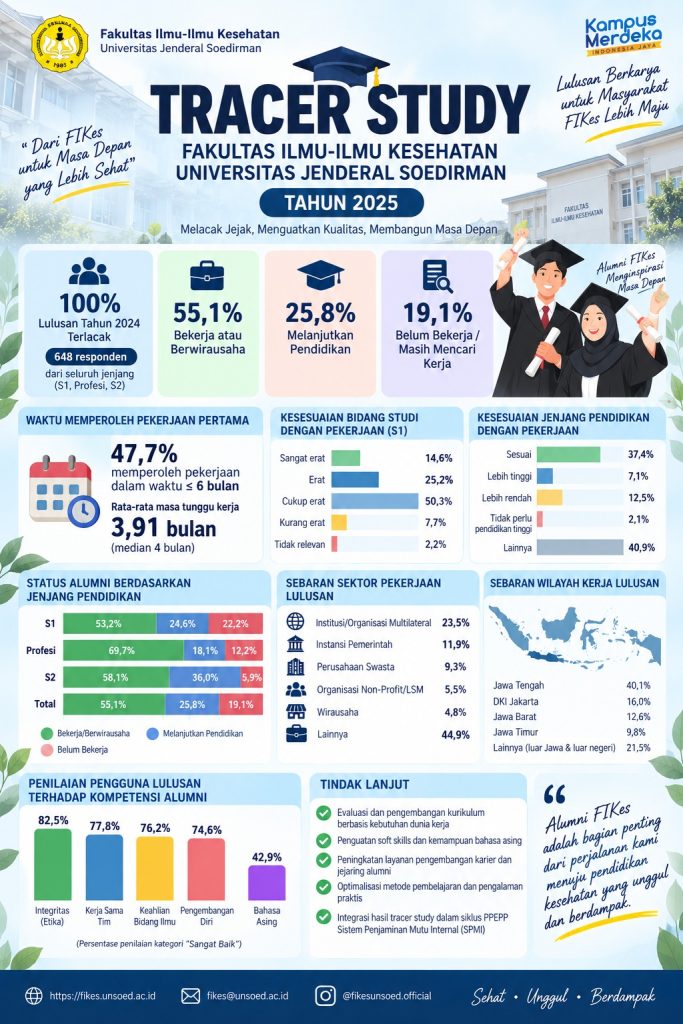
Hasil tracer study menunjukkan bahwa 55,1% lulusan berstatus bekerja atau berwirausaha, sementara 25,8% melanjutkan pendidikan dan 19,1% berada pada kategori belum bekerja atau masih mencari pekerjaan. Temuan ini menunjukkan bahwa lebih dari separuh lulusan telah memasuki dunia kerja atau mengembangkan usaha dalam periode setelah kelulusan.
Salah satu indikator penting yang diukur dalam tracer study adalah masa tunggu memperoleh pekerjaan pertama. Dari 648 responden, 47,7% alumni memperoleh pekerjaan dalam waktu ≤6 bulan, sedangkan 30,7% membutuhkan waktu lebih dari enam bulan. Rata-rata masa tunggu kerja tercatat 3,91 bulan, dengan median empat bulan.
Jika dilihat berdasarkan program studi, beberapa program menunjukkan penyerapan kerja yang sangat cepat. Alumni dari Keperawatan, Keperawatan Internasional, S2 Kesehatan Masyarakat, dan S2 Keperawatan yang bekerja tercatat memperoleh pekerjaan dalam waktu ≤6 bulan dengan proporsi 100%. Sementara itu, Pendidikan Profesi Apoteker mencapai 90,1% dan Pendidikan Profesi Ners 78,0% pada kategori masa tunggu ≤6 bulan.
Khusus S1 Kesehatan Masyarakat, sebanyak 73 dari 102 alumni yang bekerja (71,6%) memperoleh pekerjaan dalam waktu ≤6 bulan.
Tracer study juga menunjukkan bahwa lulusan FIKes UNSOED memiliki jangkauan karier yang luas. Alumni bekerja di berbagai sektor, antara lain institusi atau organisasi multilateral, instansi pemerintah, perusahaan swasta, organisasi non-profit, hingga wirausaha.
Pada seluruh jenjang, sektor institusi/organisasi multilateral menjadi salah satu penyerap terbesar dengan 23,5%, diikuti instansi pemerintah sebesar 11,9% dan perusahaan swasta sebesar 9,3%. Secara geografis, penyerapan lulusan masih didominasi Pulau Jawa, khususnya Jawa Tengah, DKI Jakarta, dan Jawa Barat, namun sebagian alumni telah bekerja di luar Jawa hingga luar negeri.
Untuk lulusan S1, bidang pekerjaan juga menunjukkan cakupan yang luas, mulai dari pelayanan kesehatan dan klinis, pemerintahan dan sektor publik, organisasi non-profit dan multilateral, sektor swasta dan korporasi, pendidikan, hingga kewirausahaan dan jasa kreatif.
Hasil tracer study juga memberikan gambaran mengenai keselarasan antara pendidikan dan pekerjaan alumni. Pada aspek keselarasan horizontal, sebanyak 39,8% lulusan S1 menyatakan bidang studi memiliki hubungan erat hingga sangat erat dengan pekerjaan yang dijalani. Sementara itu, hanya 9,9% yang menyatakan hubungan kurang erat atau tidak relevan sama sekali.
Pada aspek keselarasan vertikal, 44,5% lulusan bekerja pada pekerjaan dengan jenjang pendidikan yang sesuai atau membutuhkan kualifikasi lebih tinggi, sedangkan 14,6% bekerja pada pekerjaan yang membutuhkan jenjang pendidikan lebih rendah atau tidak memerlukan pendidikan tinggi.
Temuan tersebut menjadi salah satu indikator penting bagi FIKes UNSOED dalam mengevaluasi relevansi kurikulum dengan kebutuhan dunia kerja.
Tracer study tidak hanya melihat status pekerjaan alumni, tetapi juga menggali kompetensi yang dibutuhkan dalam dunia kerja. Tujuh kompetensi yang dinilai meliputi etika, bidang ilmu, bahasa Inggris, penggunaan teknologi informasi, komunikasi, kerja sama tim, dan pengembangan diri.
Hasil survei pengguna lulusan memperlihatkan penilaian sangat baik terutama pada aspek integritas (82,5%), kerja sama tim (77,8%), keahlian bidang ilmu (76,2%), dan pengembangan diri (74,6%). Di sisi lain, kemampuan bahasa asing menjadi salah satu area yang masih perlu diperkuat, dengan penilaian “Sangat Baik” sebesar 42,9%.
Temuan tersebut menjadi masukan penting bagi FIKes UNSOED untuk terus memperkuat kompetensi lulusan, khususnya dalam bahasa asing, komunikasi profesional, dan literasi teknologi.
Bagi FIKes UNSOED, Tracer Study bukan hanya kegiatan untuk mengetahui keberadaan alumni setelah lulus. Hasilnya digunakan sebagai feedback bagi program studi dan fakultas untuk mengevaluasi serta memperbaiki kurikulum dan pengelolaan pendidikan agar lebih sesuai dengan kebutuhan masyarakat dan dunia kerja.
Pelaksanaan dan pemanfaatan hasil tracer study juga telah diintegrasikan dalam siklus PPEPP Sistem Penjaminan Mutu Internal (SPMI). Hasil analisis dibahas bersama pimpinan fakultas dan program studi untuk menentukan area perbaikan, kemudian ditindaklanjuti melalui pengembangan kurikulum, penguatan soft skills, peningkatan kemampuan bahasa asing, layanan pengembangan karier, serta penguatan jejaring alumni.
Dengan demikian, Tracer Study FIKes UNSOED tahun 2025 menjadi salah satu instrumen penting dalam memastikan bahwa proses pendidikan terus berkembang berdasarkan data, pengalaman alumni, dan kebutuhan dunia kerja. Hasil tersebut sekaligus menjadi dasar bagi FIKes UNSOED untuk terus meningkatkan relevansi pembelajaran dan daya saing lulusan di tingkat regional, nasional, maupun lebih luas.
Unduh laporan lengkapnya disini