Info Detail
Fakultas Ilmu-ilmu Kesehatan

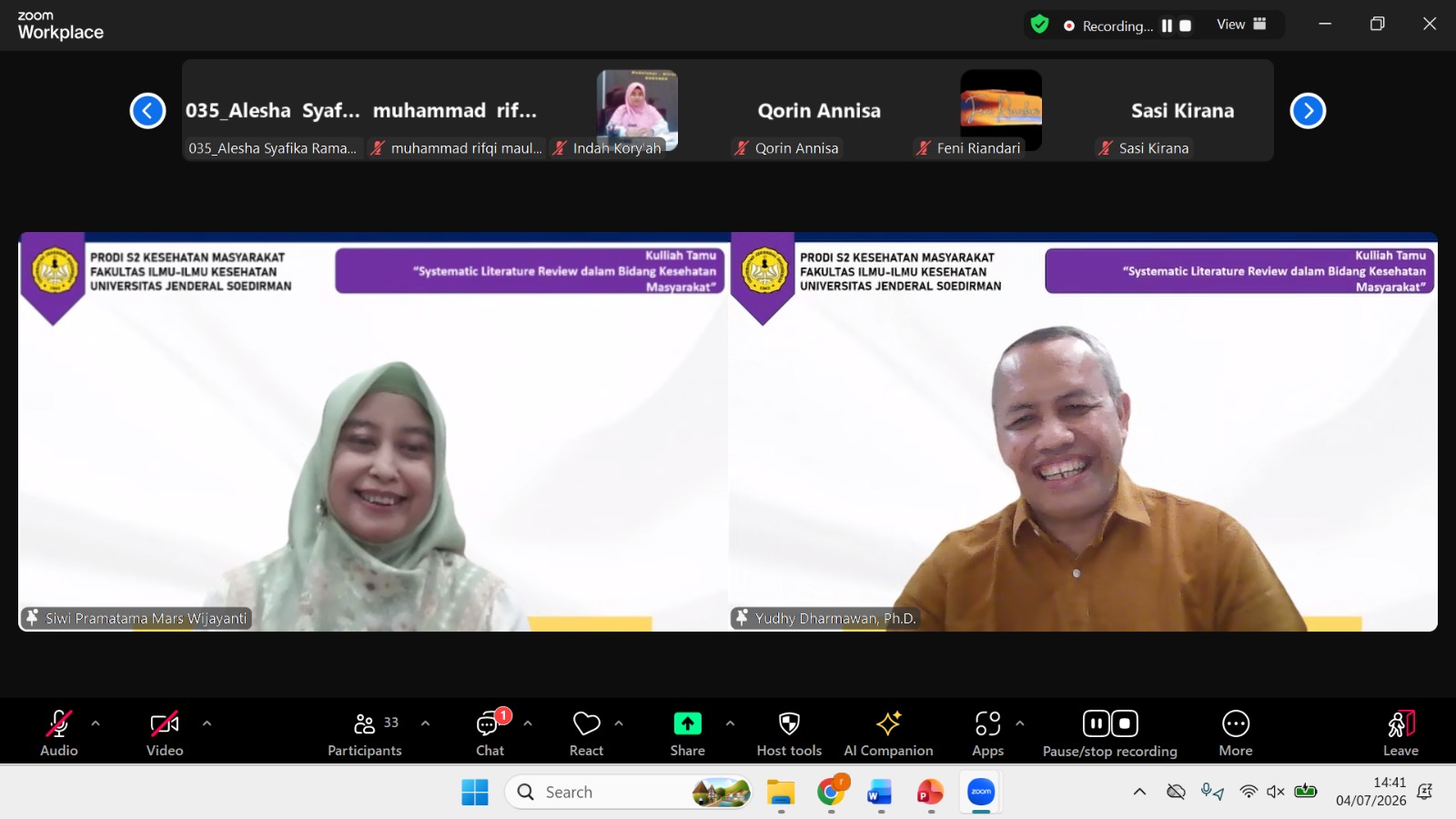
Purwokerto, 4 Juli 2026 – Program Studi Magister Kesehatan Masyarakat Fakultas Ilmu-Ilmu Kesehatan (FIKes) Universitas Jenderal Soedirman (Unsoed) kembali menyelenggarakan kegiatan Kuliah Tamu sebagai bagian dari upaya peningkatan kompetensi akademik mahasiswa. Kegiatan yang dilaksanakan secara daring melalui Zoom Meeting pada Sabtu (4/7) ini mengangkat tema “Systematic Literature Review di Bidang Kesehatan Masyarakat” dan menghadirkan Dr. Yudhy Dharmawan, S.KM., M.Kes., M.Sc., Ph.D., dosen Fakultas Kesehatan Masyarakat Universitas Diponegoro, sebagai narasumber.
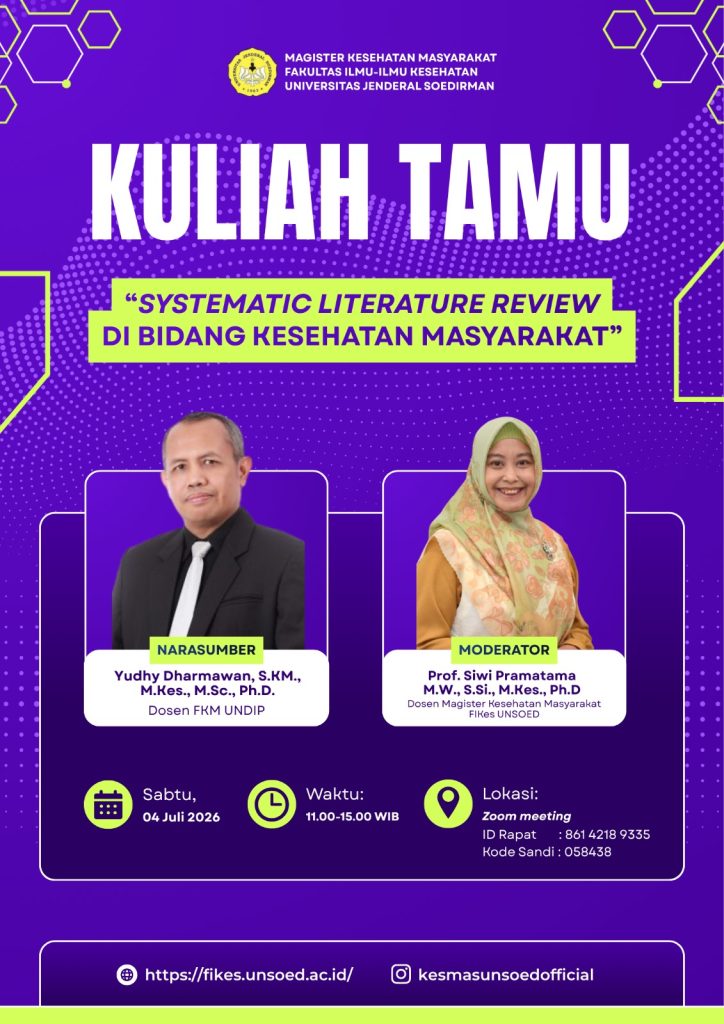
Kegiatan diikuti oleh mahasiswa Program Studi Magister Kesehatan Masyarakat, dosen, serta sivitas akademika FIKes Unsoed. Acara dibuka oleh Master of Ceremony, dilanjutkan dengan menyanyikan Lagu Indonesia Raya dan Mars FIKes, serta sambutan dari pimpinan Fakultas Ilmu-Ilmu Kesehatan Universitas Jenderal Soedirman dan Ketua Program Studi Magister Kesehatan Masyarakat.
Dalam sambutannya, pimpinan fakultas menyampaikan bahwa penguasaan metodologi penelitian merupakan salah satu kompetensi utama yang harus dimiliki mahasiswa magister. Oleh karena itu, penyelenggaraan kuliah tamu dengan menghadirkan pakar dari perguruan tinggi mitra diharapkan dapat memperluas wawasan akademik mahasiswa sekaligus memperkuat kualitas penelitian dan publikasi ilmiah.
Pada sesi utama, Dr. Yudhy Dharmawan memaparkan konsep dasar Systematic Literature Review (SLR) sebagai salah satu metode penelitian berbasis sintesis bukti (evidence synthesis) yang saat ini banyak digunakan dalam bidang kesehatan masyarakat. Materi yang disampaikan meliputi perbedaan antara literature review, scoping review, systematic literature review, dan meta-analysis, serta tahapan penyusunan SLR mulai dari perumusan pertanyaan penelitian menggunakan kerangka PICO (Population, Intervention, Comparison, Outcome), penyusunan protokol penelitian, strategi pencarian literatur, proses seleksi artikel berdasarkan pedoman PRISMA, telaah kritis (critical appraisal), ekstraksi data, hingga sintesis hasil penelitian.
Selain menjelaskan aspek metodologis, narasumber juga memberikan berbagai tips praktis dalam melakukan pencarian artikel pada database ilmiah bereputasi seperti PubMed, MEDLINE, Web of Science, EMBASE, dan Cochrane Library. Peserta juga diperkenalkan pada pentingnya penggunaan kata kunci, Medical Subject Headings (MeSH), serta Boolean Operators untuk memperoleh hasil pencarian yang lebih relevan dan komprehensif.
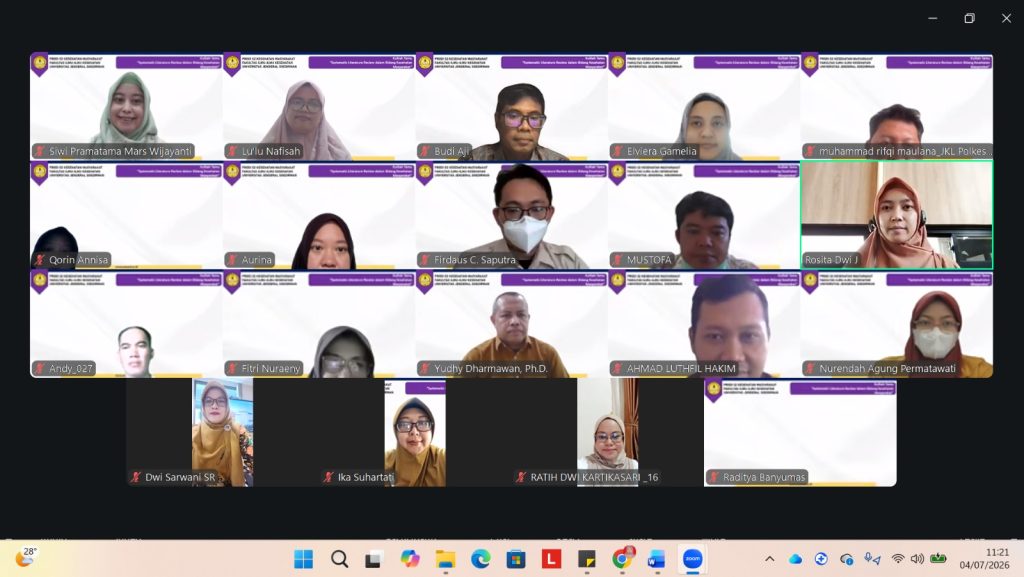
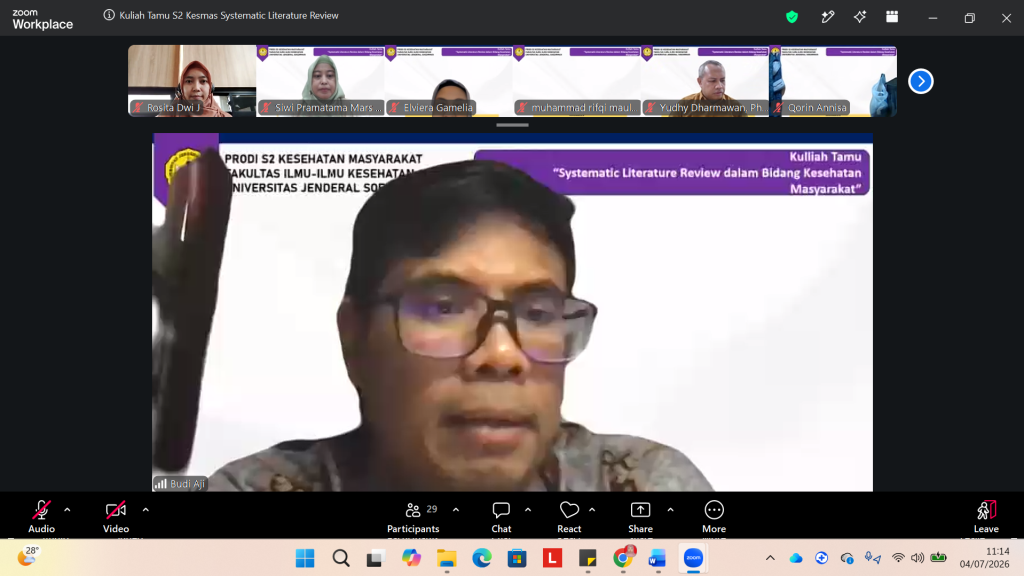
Suasana diskusi berlangsung interaktif dengan antusiasme peserta yang tinggi. Berbagai pertanyaan diajukan terkait perbedaan antara scoping review dan systematic literature review, penggunaan bibliometric analysis, registrasi protokol penelitian melalui PROSPERO, pemilihan database ilmiah, hingga strategi menyusun artikel systematic review yang berpotensi dipublikasikan pada jurnal bereputasi. Narasumber memberikan penjelasan disertai contoh penerapan dalam penelitian kesehatan masyarakat sehingga peserta memperoleh pemahaman yang lebih aplikatif.
Melalui kegiatan ini, mahasiswa diharapkan mampu memahami konsep dan tahapan penyusunan Systematic Literature Review secara komprehensif serta mampu mengimplementasikannya dalam penyusunan proposal penelitian, tesis, maupun publikasi ilmiah berbasis bukti. Kegiatan ini juga menjadi salah satu bentuk komitmen Program Studi Magister Kesehatan Masyarakat FIKes Unsoed dalam menghadirkan atmosfer akademik yang dinamis melalui kolaborasi dengan akademisi dari berbagai perguruan tinggi.
Program Studi Magister Kesehatan Masyarakat FIKes Unsoed akan terus menyelenggarakan kegiatan akademik serupa sebagai upaya meningkatkan kapasitas mahasiswa, memperkuat jejaring akademik, serta mendukung pengembangan penelitian yang berkualitas dan berdampak bagi peningkatan derajat kesehatan masyarakat.
Kegiatan ini juga mencerminkan komitmen Fakultas Ilmu-Ilmu Kesehatan Universitas Jenderal Soedirman dalam mendukung pencapaian Sustainable Development Goals (SDGs), khususnya Tujuan 3 (Good Health and Well-being) melalui penguatan kapasitas sumber daya manusia di bidang kesehatan, Tujuan 4 (Quality Education) dengan penyelenggaraan pendidikan tinggi yang berkualitas dan berbasis riset, serta Tujuan 17 (Partnerships for the Goals) melalui kolaborasi akademik dengan berbagai perguruan tinggi. Melalui penguatan budaya penelitian berbasis bukti (evidence-based research) dan jejaring akademik yang berkelanjutan, FIKes Unsoed berkomitmen untuk menghasilkan lulusan, penelitian, dan inovasi yang berkontribusi nyata dalam peningkatan kualitas kesehatan masyarakat di tingkat nasional maupun global.