Info Detail
Fakultas Ilmu-ilmu Kesehatan

Banyumas – Fakultas Ilmu Kesehatan (FIKes) Universitas Jenderal Soedirman (UNSOED) terus memperkuat komitmennya dalam mendukung peningkatan kesehatan remaja dan penguatan Usaha Kesehatan Sekolah/Madrasah (UKS/M) melalui pelaksanaan program PERMATA-UKS di MTs Al-Masruriyah, Baturraden, Kabupaten Banyumas. PERMATA-UKS merupakan akronim dari “Penguatan Edukasi, Remaja, dan Manajemen Terpadu Usaha Kesehatan Sekolah” yang dikembangkan sebagai pendekatan pemberdayaan warga madrasah dalam mengoptimalkan pelaksanaan Trias UKS/M. Program pengabdian ini mengusung tema “Optimalisasi Trias UKS melalui Pelatihan Kader Sebaya untuk Mewujudkan Madrasah Sehat dan Ramah Remaja.”
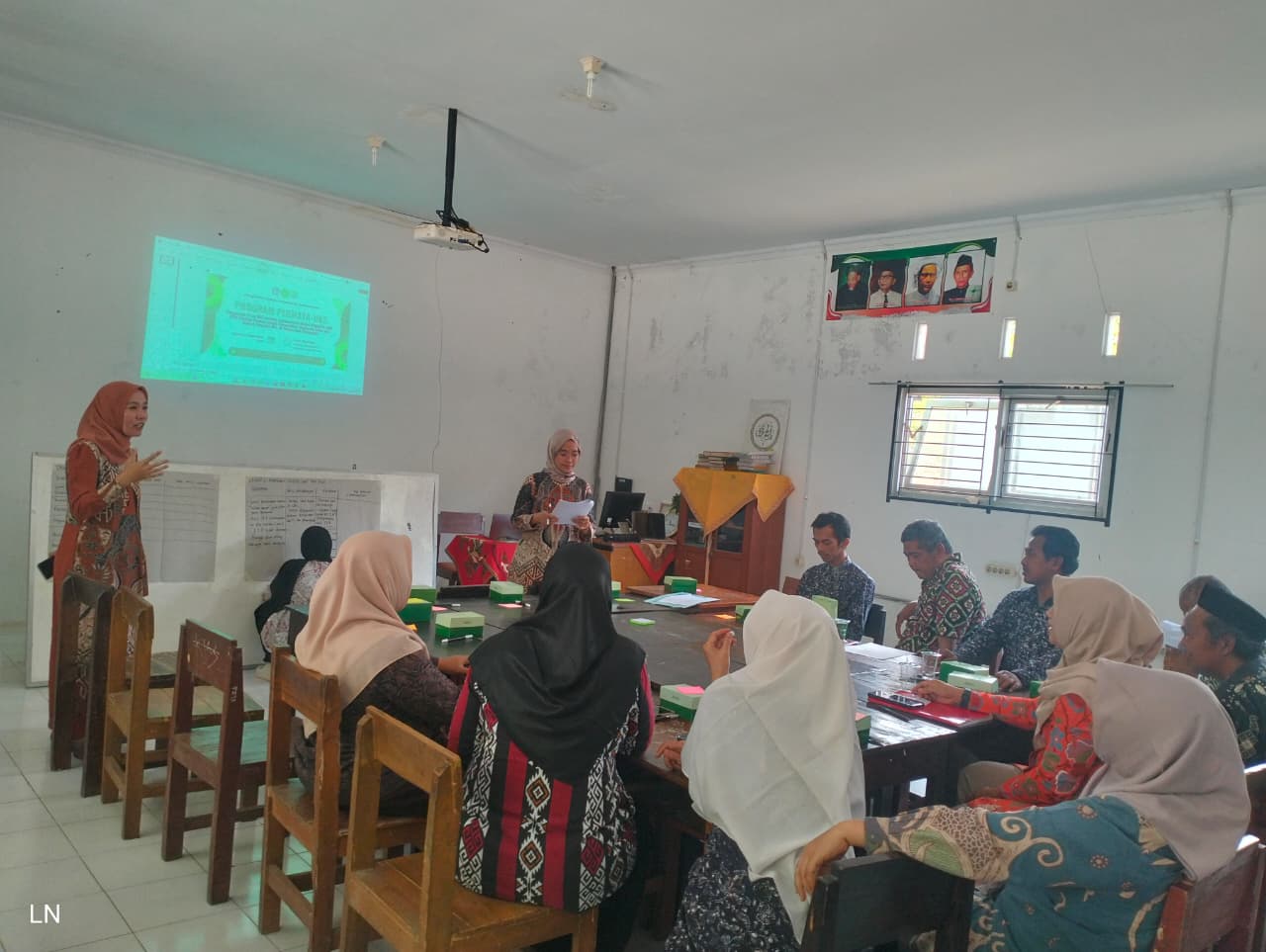
Kegiatan ini dilaksanakan oleh tim FIKes UNSOED yang terdiri atas Lu’lu Nafisah, S.KM., M.K.M. selaku ketua tim, bersama anggota tim Leni Maryati, S.Si.T., M.Kes.; Nur Intan Kartika Sari, S.Tr.Keb., M.P.H.; dan Yuditha Nindya Kartika Rizqi, S.KM., M.P.H. Rangkaian kegiatan utama program PERMATA-UKS tahun 2026 telah dilaksanakan melalui asesmen awal kesehatan siswa, Focus Group Discussion (FGD), serta Musyawarah Madrasah Sehat. Kegiatan tersebut menjadi bagian penting dalam mengidentifikasi kondisi kesehatan remaja sekaligus merumuskan kebutuhan dan strategi penguatan UKS/M di lingkungan madrasah.
Asesmen awal melibatkan sebanyak 125 siswa kelas VII–IX MTs Al-Masruriyah. Hasil asesmen menunjukkan masih terdapat sejumlah tantangan dalam penerapan perilaku hidup bersih dan sehat, aktivitas fisik, kesehatan psikologis, perilaku berisiko, serta literasi kesehatan reproduksi remaja. Selain itu, pemanfaatan UKS oleh siswa masih perlu ditingkatkan, khususnya dalam mendukung kegiatan promotif dan preventif.
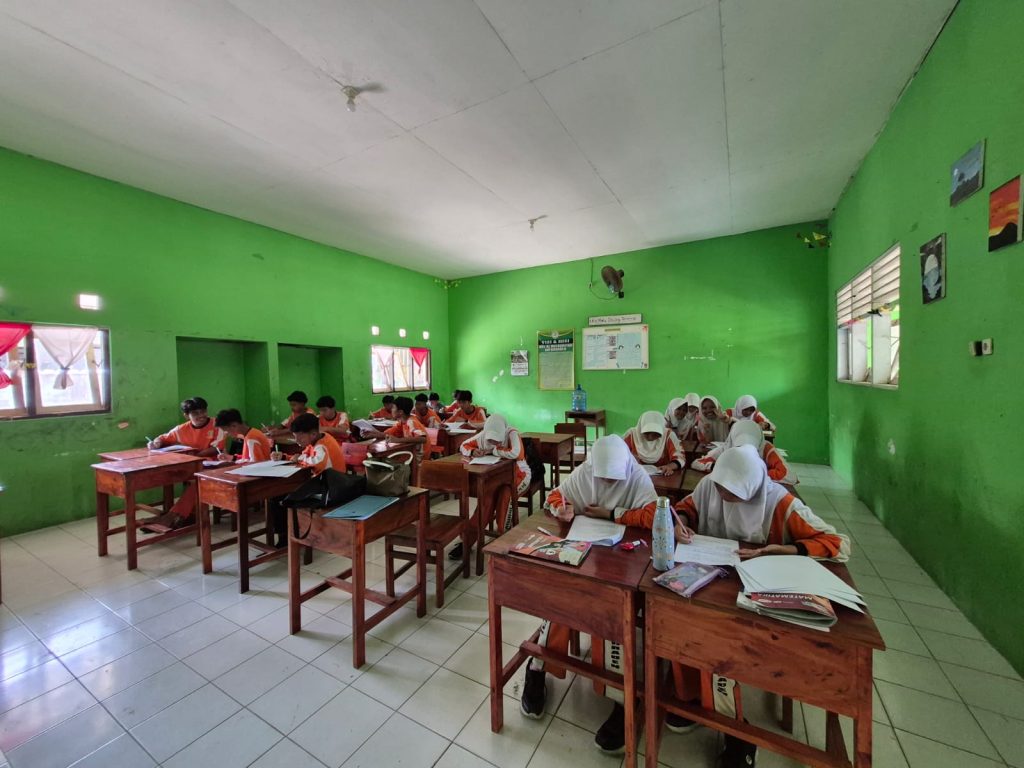
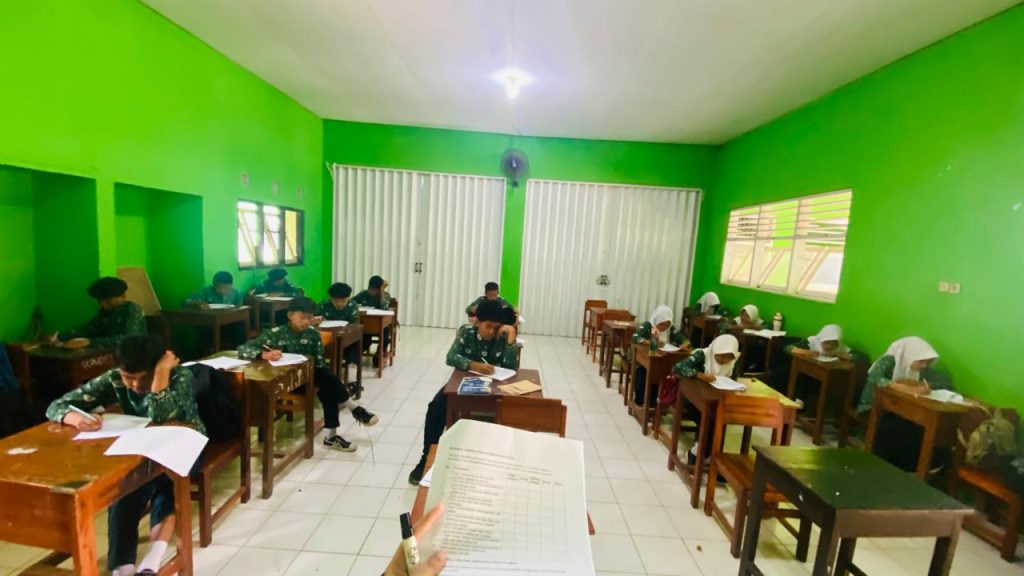
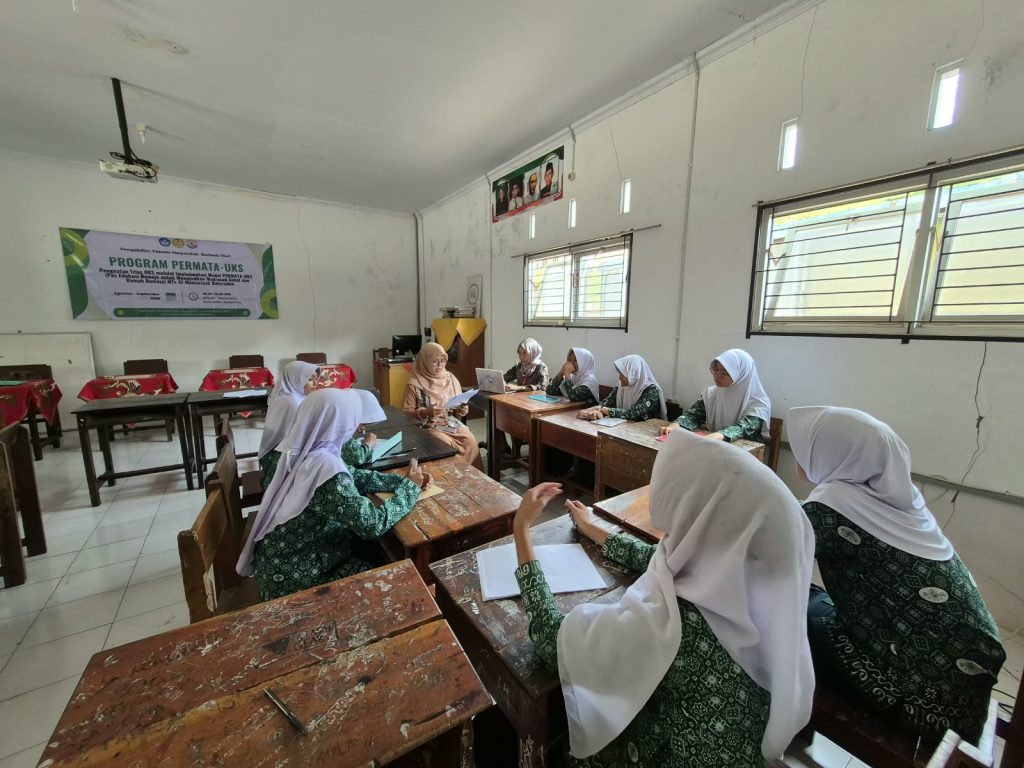
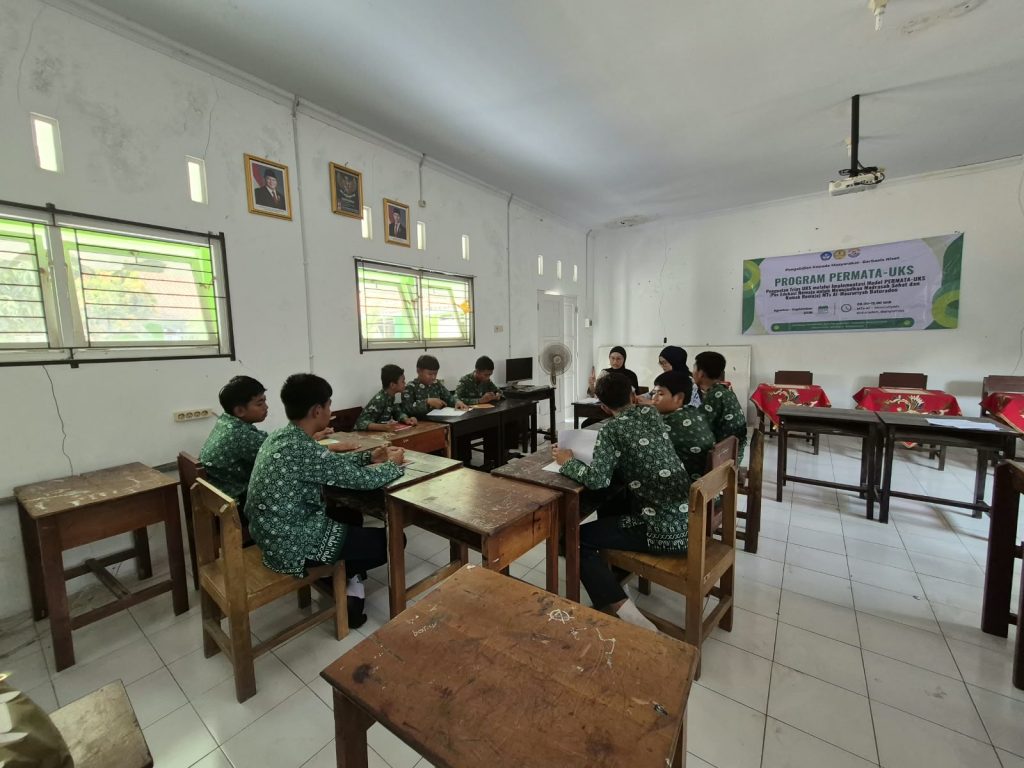
Temuan tersebut kemudian diperdalam melalui FGD bersama siswa dan siswi. Dalam kegiatan tersebut, peserta menyampaikan berbagai pengalaman, kebutuhan, dan harapan terhadap pengembangan UKS di madrasah. Siswa berharap agar UKS tidak hanya berfungsi sebagai tempat berobat atau beristirahat ketika sakit, tetapi juga dapat dikembangkan menjadi pusat edukasi, promosi kesehatan, dan pencegahan masalah kesehatan remaja.
Hasil diskusi menunjukkan sejumlah kebutuhan prioritas, antara lain peningkatan fasilitas UKS dan perlengkapan Pertolongan Pertama pada Kecelakaan (P3K), peningkatan kebersihan dan kenyamanan ruang UKS, penyelenggaraan kegiatan edukasi kesehatan yang lebih menarik dan partisipatif, serta pengembangan layanan UKS yang lebih ramah dan responsif terhadap kebutuhan siswa.
Rangkaian kegiatan kemudian dilanjutkan dengan Musyawarah Madrasah Sehat yang melibatkan pihak madrasah dan perwakilan siswa. Forum ini menjadi ruang dialog untuk membahas penguatan pelaksanaan Trias UKS/M, yang meliputi pendidikan kesehatan, pelayanan kesehatan, serta pembinaan lingkungan sekolah atau madrasah sehat.
Salah satu hasil penting dari kegiatan tersebut adalah adanya kesediaan siswa untuk berperan sebagai kader kesehatan sebaya serta komitmen pihak madrasah untuk mendukung keberlanjutan program penguatan UKS/M. Kader sebaya diharapkan dapat menjadi penggerak edukasi kesehatan dan mitra bagi siswa dalam menciptakan lingkungan madrasah yang sehat, aman, dan nyaman.
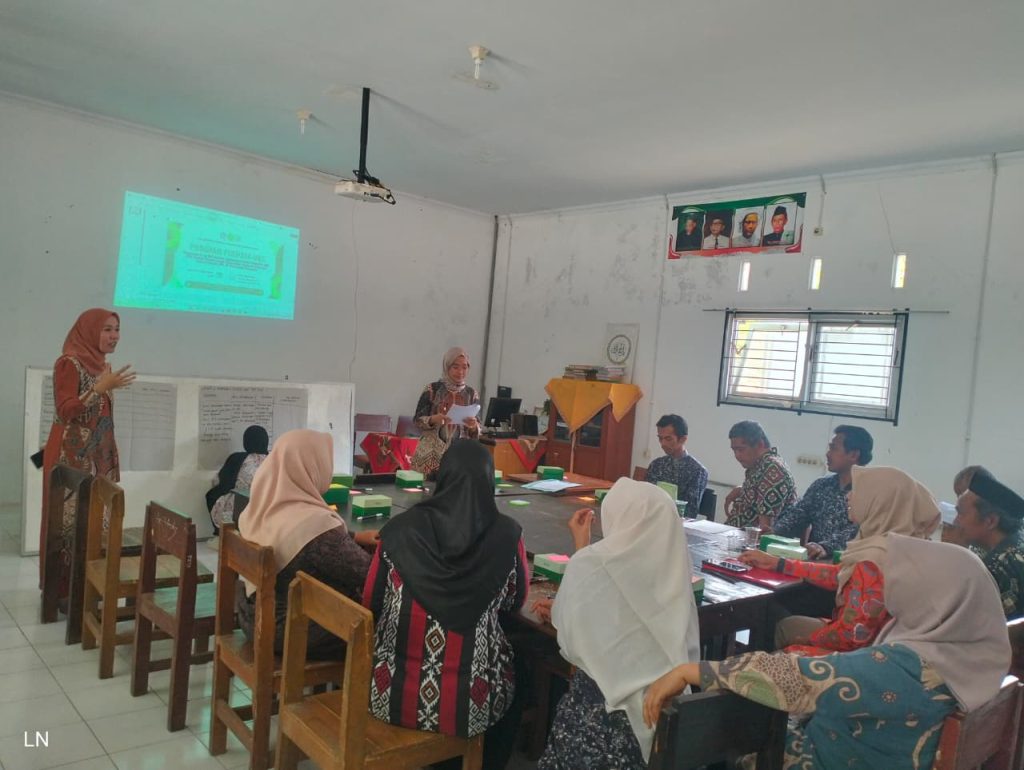
Selain pelaksanaan asesmen, FGD, dan musyawarah, kegiatan PERMATA-UKS juga diperkuat melalui penandatanganan Perjanjian Kerja Sama (PKS) antara FIKes UNSOED dan MTs Al-Masruriyah. Penandatanganan PKS tersebut menjadi bentuk komitmen bersama untuk memperkuat sinergi kelembagaan dalam bidang pendidikan, promosi kesehatan, pemberdayaan remaja, serta pengembangan UKS/M secara berkelanjutan.
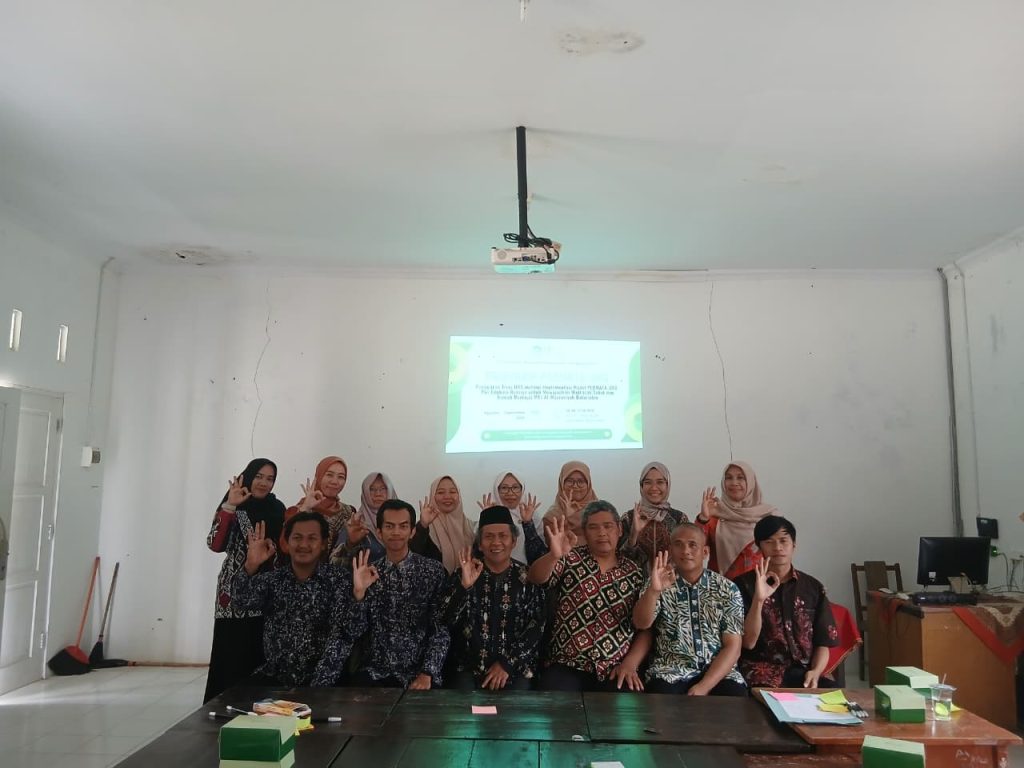
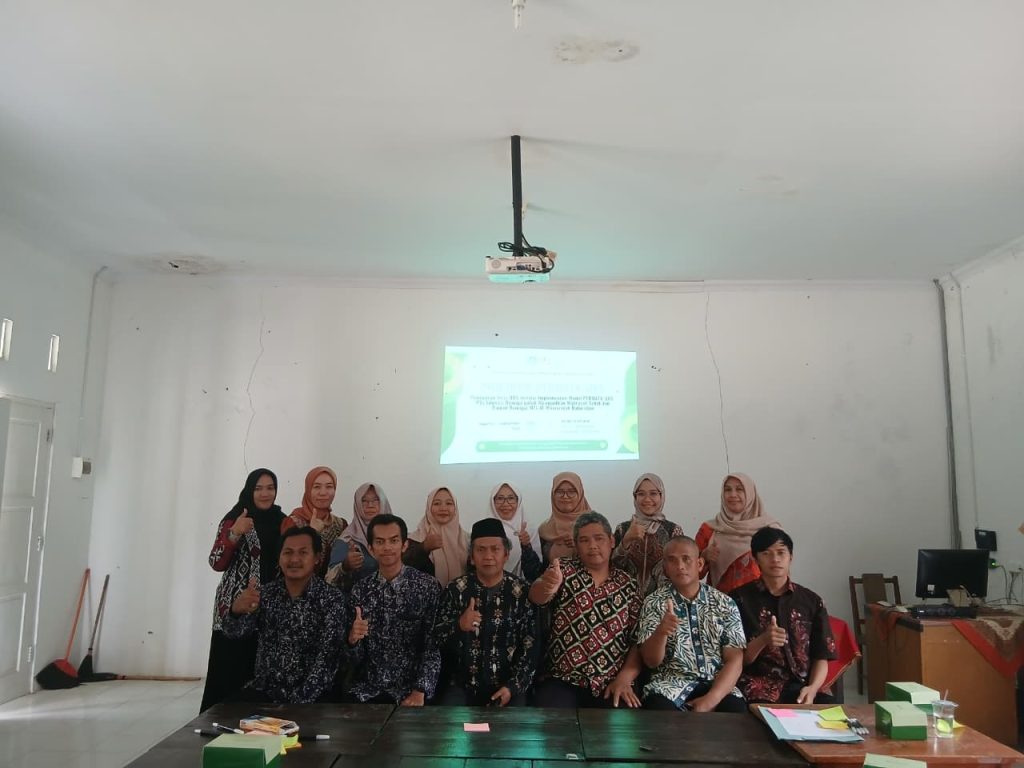
Sebagai tindak lanjut kegiatan, FIKes UNSOED bersama MTs Al-Masruriyah akan melanjutkan program melalui rangkaian edukasi kesehatan dan Pos Edukasi Remaja. Kegiatan ini dirancang secara partisipatif dengan melibatkan siswa, kader sebaya, guru, dan pihak madrasah.
Pos Edukasi Remaja akan mengangkat beberapa tema penting, antara lain:
Selain edukasi, kegiatan akan dilanjutkan dengan pelatihan dan penguatan kapasitas kader sebaya agar siswa mampu berperan sebagai edukator dan agen perubahan di lingkungan madrasah. Program ini juga diarahkan untuk memperkuat pelaksanaan Trias UKS, yaitu pendidikan kesehatan, pelayanan kesehatan, dan pembinaan lingkungan madrasah yang sehat.
Pelaksanaan program ini juga mendukung pencapaian Sustainable Development Goals (SDGs), khususnya SDG 3: Kehidupan Sehat dan Sejahtera, melalui penguatan promosi kesehatan dan pencegahan masalah kesehatan remaja; SDG 4: Pendidikan Berkualitas, melalui pengembangan pendidikan kesehatan dan keterampilan hidup sehat; serta SDG 17: Kemitraan untuk Mencapai Tujuan, melalui kolaborasi antara perguruan tinggi dan madrasah. Kolaborasi ini diharapkan dapat menjadi langkah berkelanjutan dalam mewujudkan madrasah sehat, berdaya, partisipatif, dan ramah remaja.
26 Mei 2026
25 Mei 2026
25 Mei 2026
25 Mei 2026
21 Mei 2026
Fakultas Ilmu-ilmu Kesehatan
We firmly believe that the internet should be available and accessible to anyone, and are committed to providing a website that is accessible to the widest possible audience, regardless of circumstance and ability.
To fulfill this, we aim to adhere as strictly as possible to the World Wide Web Consortium’s (W3C) Web Content Accessibility Guidelines 2.1 (WCAG 2.1) at the AA level. These guidelines explain how to make web content accessible to people with a wide array of disabilities. Complying with those guidelines helps us ensure that the website is accessible to all people: blind people, people with motor impairments, visual impairment, cognitive disabilities, and more.
This website utilizes various technologies that are meant to make it as accessible as possible at all times. We utilize an accessibility interface that allows persons with specific disabilities to adjust the website’s UI (user interface) and design it to their personal needs.
Additionally, the website utilizes an AI-based application that runs in the background and optimizes its accessibility level constantly. This application remediates the website’s HTML, adapts Its functionality and behavior for screen-readers used by the blind users, and for keyboard functions used by individuals with motor impairments.
If you’ve found a malfunction or have ideas for improvement, we’ll be happy to hear from you. You can reach out to the website’s operators by using the following email
Our website implements the ARIA attributes (Accessible Rich Internet Applications) technique, alongside various different behavioral changes, to ensure blind users visiting with screen-readers are able to read, comprehend, and enjoy the website’s functions. As soon as a user with a screen-reader enters your site, they immediately receive a prompt to enter the Screen-Reader Profile so they can browse and operate your site effectively. Here’s how our website covers some of the most important screen-reader requirements, alongside console screenshots of code examples:
Screen-reader optimization: we run a background process that learns the website’s components from top to bottom, to ensure ongoing compliance even when updating the website. In this process, we provide screen-readers with meaningful data using the ARIA set of attributes. For example, we provide accurate form labels; descriptions for actionable icons (social media icons, search icons, cart icons, etc.); validation guidance for form inputs; element roles such as buttons, menus, modal dialogues (popups), and others. Additionally, the background process scans all of the website’s images and provides an accurate and meaningful image-object-recognition-based description as an ALT (alternate text) tag for images that are not described. It will also extract texts that are embedded within the image, using an OCR (optical character recognition) technology. To turn on screen-reader adjustments at any time, users need only to press the Alt+1 keyboard combination. Screen-reader users also get automatic announcements to turn the Screen-reader mode on as soon as they enter the website.
These adjustments are compatible with all popular screen readers, including JAWS and NVDA.
Keyboard navigation optimization: The background process also adjusts the website’s HTML, and adds various behaviors using JavaScript code to make the website operable by the keyboard. This includes the ability to navigate the website using the Tab and Shift+Tab keys, operate dropdowns with the arrow keys, close them with Esc, trigger buttons and links using the Enter key, navigate between radio and checkbox elements using the arrow keys, and fill them in with the Spacebar or Enter key.Additionally, keyboard users will find quick-navigation and content-skip menus, available at any time by clicking Alt+1, or as the first elements of the site while navigating with the keyboard. The background process also handles triggered popups by moving the keyboard focus towards them as soon as they appear, and not allow the focus drift outside of it.
Users can also use shortcuts such as “M” (menus), “H” (headings), “F” (forms), “B” (buttons), and “G” (graphics) to jump to specific elements.
We aim to support the widest array of browsers and assistive technologies as possible, so our users can choose the best fitting tools for them, with as few limitations as possible. Therefore, we have worked very hard to be able to support all major systems that comprise over 95% of the user market share including Google Chrome, Mozilla Firefox, Apple Safari, Opera and Microsoft Edge, JAWS and NVDA (screen readers), both for Windows and for MAC users.
Despite our very best efforts to allow anybody to adjust the website to their needs, there may still be pages or sections that are not fully accessible, are in the process of becoming accessible, or are lacking an adequate technological solution to make them accessible. Still, we are continually improving our accessibility, adding, updating and improving its options and features, and developing and adopting new technologies. All this is meant to reach the optimal level of accessibility, following technological advancements. For any assistance, please reach out to