Info Detail
Fakultas Ilmu-ilmu Kesehatan

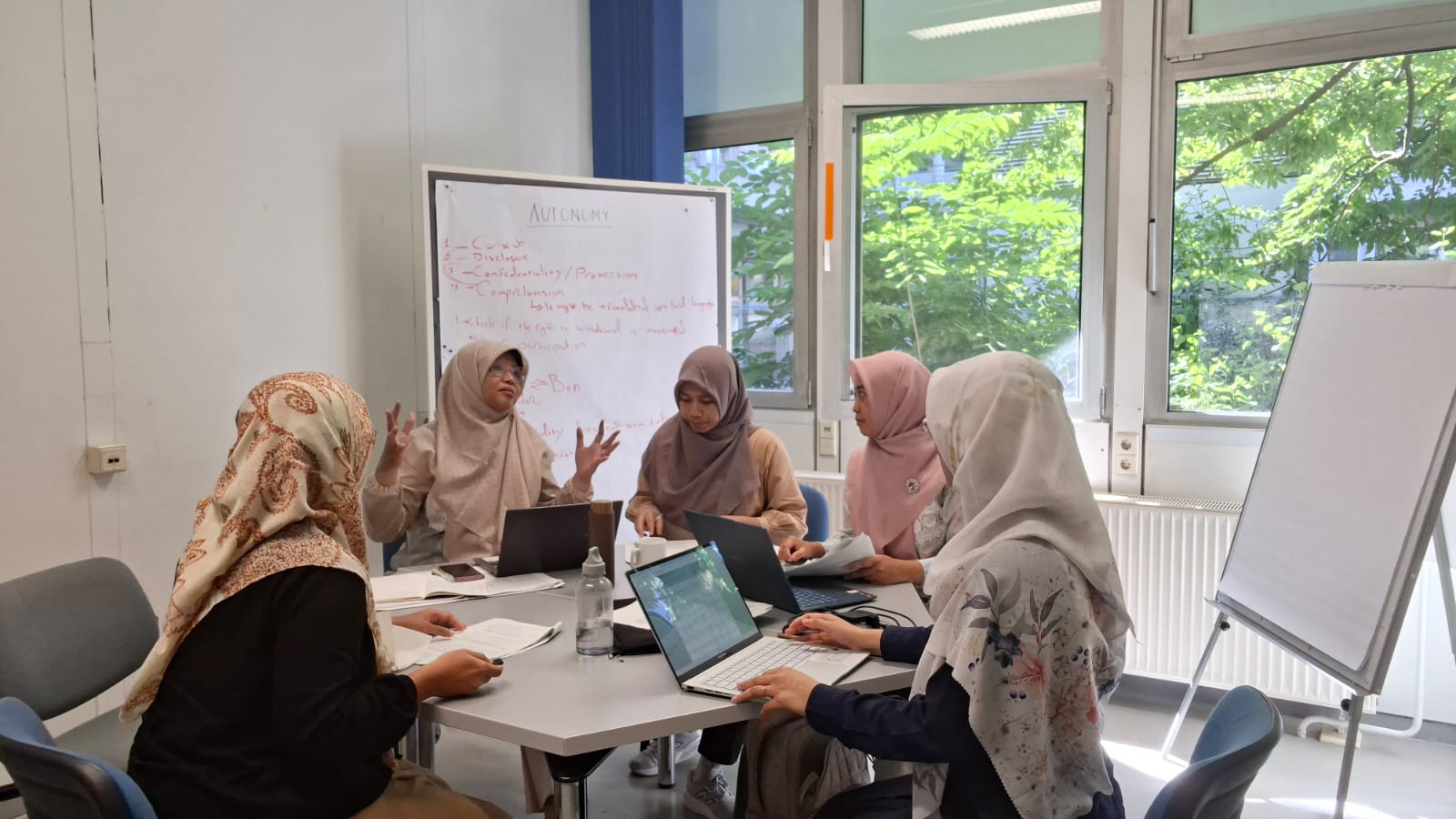
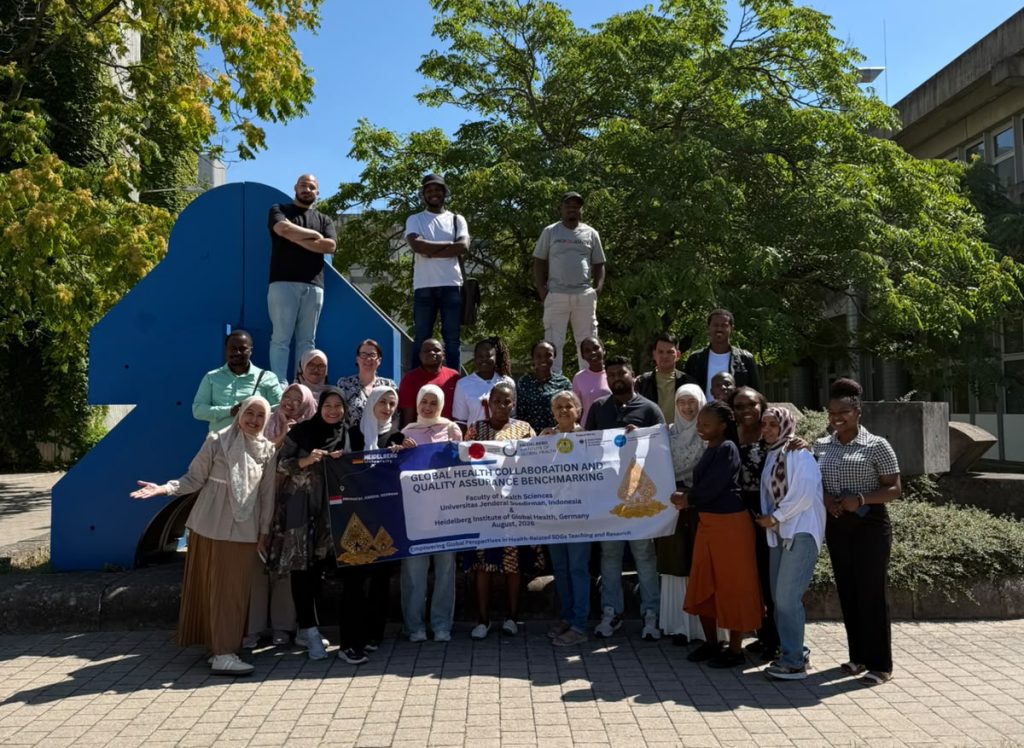
Heidelberg, Jerman – Fakultas Ilmu-Ilmu Kesehatan (FIKes) Universitas Jenderal Soedirman (UNSOED) terus memperkuat internasionalisasi pendidikan melalui pelaksanaan Joint Course Development Programme dan Quality Assurance Benchmarking bersama Heidelberg Institute of Global Health (HIGH), Heidelberg University, Jerman. Kegiatan yang berlangsung sepanjang Agustus 2026 ini merupakan kelanjutan dari International Summer Course “Ethics in Global Health and Research” dan menjadi bagian dari implementasi proyek kerja sama internasional Sustainable Horizons: Empowering Global Perspectives in Health-related SDGs Teaching and Research in Indonesia, yang didukung oleh German Academic Exchange Service (DAAD) dan Federal Ministry for Economic Cooperation and Development (BMZ), Germany.
Program ini bertujuan mengembangkan Global Health Track pada Program Studi Magister Kesehatan Masyarakat FIKes UNSOED melalui penyusunan mata kuliah bersama (joint course development), penguatan kapasitas dosen, serta benchmarking sistem penjaminan mutu akademik yang mengacu pada praktik terbaik di Heidelberg University. Selama hampir tiga minggu, delegasi UNSOED dan tim Heidelberg bekerja secara intensif dalam lokakarya penyusunan kurikulum, diskusi akademik, pertemuan manajemen proyek, hingga benchmarking sistem pembelajaran dan quality assurance.
Delegasi FIKes UNSOED terdiri atas Prof. Dr.sc.hum. Budi Aji, S.KM., M.Sc., Prof. Yunita Sari, S.Kep., Ns., MSH., Ph.D., Prof. Siwi Pramatama Mars Wijayanti, Dr. Arih Diyaning Intiasari, S.K.M., M.P.H., dan Lu’lu Nafisah, S.K.M., M.K.M. yang berkolaborasi dengan tim akademik Heidelberg Institute of Global Health, yaitu Dr. Shafiu Mohammed, Pauline Grys, Anna Munz, serta dua Subject Experts, Varalakshmi Elango (Vara) dan Jamila Nabieva, yang memberikan pendampingan dalam pengembangan kurikulum dan strategi pembelajaran Global Health.
Salah satu luaran utama kegiatan ini adalah penyusunan tujuh mata kuliah Global Health yang akan menjadi fondasi Global Health Track pada Program Studi Magister Kesehatan Masyarakat FIKes UNSOED. Setiap anggota tim bertanggung jawab mengembangkan mata kuliah sesuai bidang kepakarannya. Prof. Dr.sc.hum. Budi Aji, S.KM., M.Sc. mengembangkan mata kuliah Health System Performance: Thinking Global and Acting Local, Prof. Yunita Sari, S.Kep., Ns., MSH., Ph.D. bersama Prof. Siwi Pramatama Mars Wijayanti mengembangkan Protecting People: Ethics in Global Health Work and Research, Dr. Arih Diyaning Intiasari, S.K.M., M.P.H. mengembangkan Advocacy in Global Health, Lu’lu Nafisah, S.K.M., M.K.M. mengembangkan Global Policies in Community Health Practice, sedangkan Yuditha Nindya Kartika Rizqi, S.KM., MPH bertanggung jawab dalam pengembangan mata kuliah Contextualizing Mental Health – From Global Burden to Local Solutions.
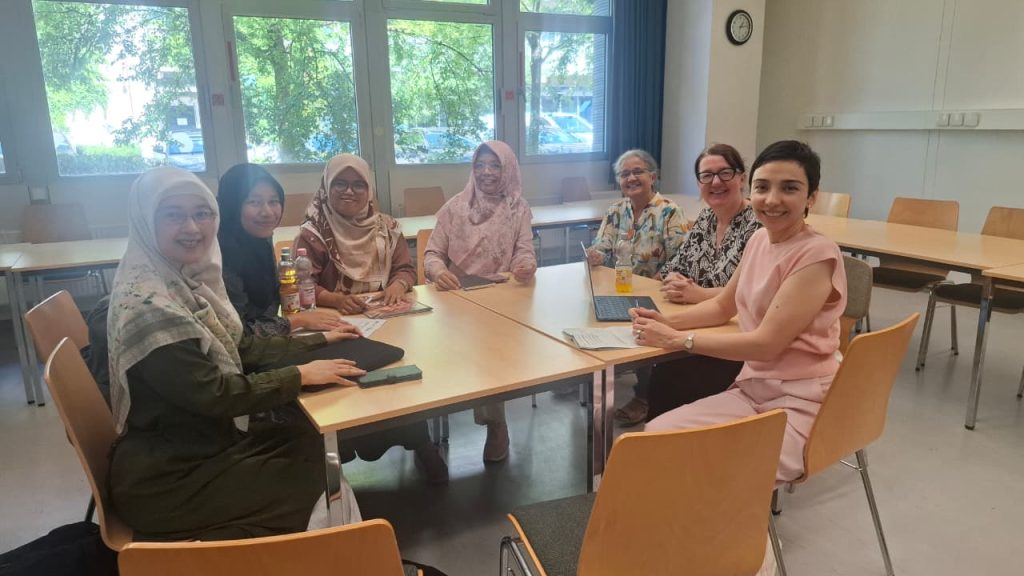
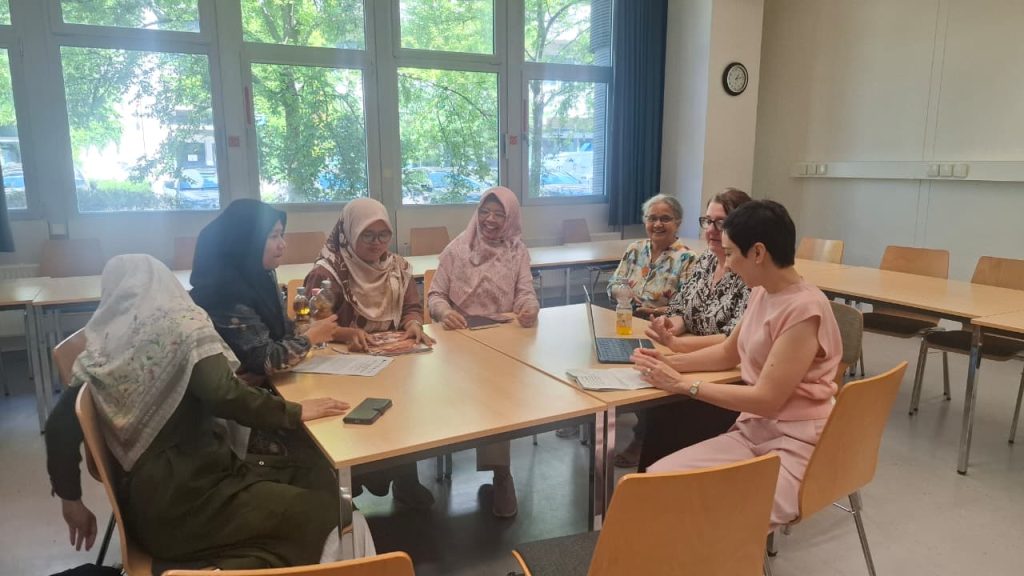
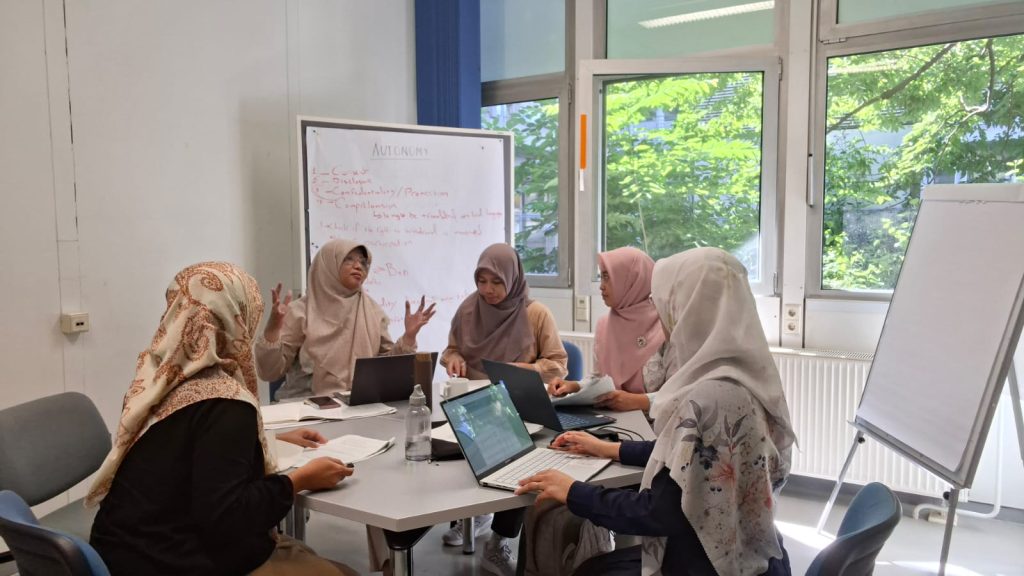
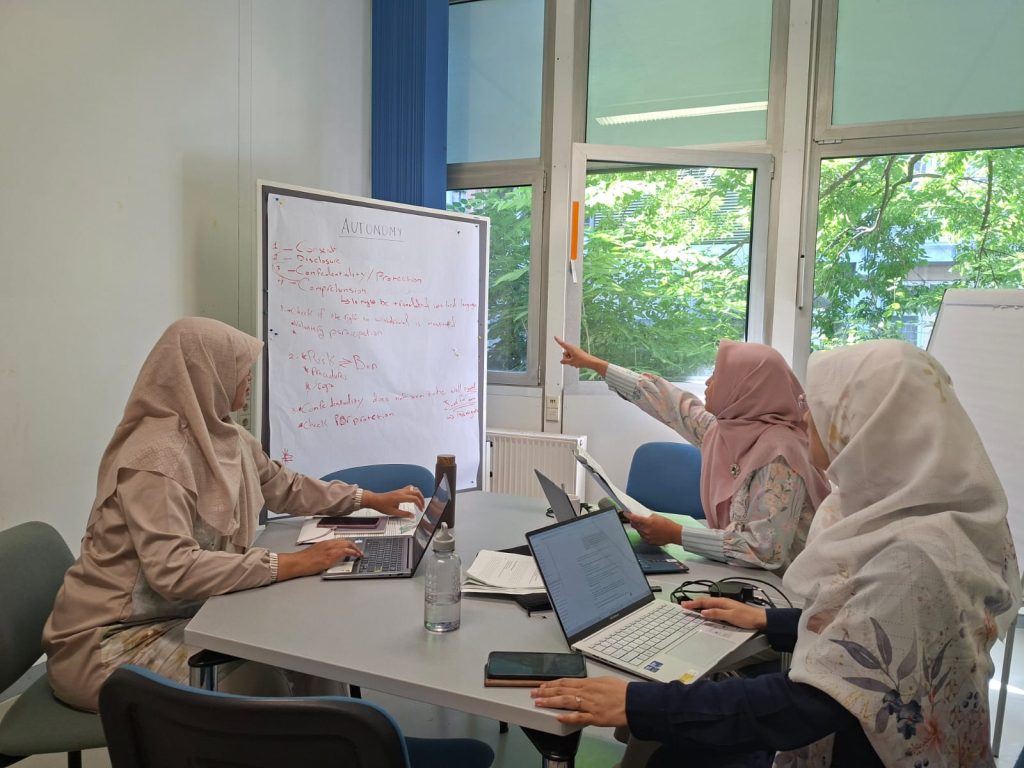
Selama proses pengembangan kurikulum, setiap tim memperoleh pendampingan langsung dari akademisi dan pakar internasional sesuai bidang keahliannya. Pauline Grys bersama Varalakshmi Elango (Vara) memfasilitasi pengembangan mata kuliah Protecting People: Ethics in Global Health Work and Research, termasuk penguatan materi etik, penyusunan studi kasus, dan strategi pembelajaran berbasis diskusi. Sementara itu, Jamila Nabieva memberikan masukan pada pengembangan mata kuliah Contextualizing Mental Health – From Global Burden to Local Solutions, sekaligus berbagi praktik terbaik mengenai course development, student-centered learning, serta classroom management yang diterapkan dalam pendidikan tinggi internasional. Dr. Shafiu Mohammed mendampingi pengembangan mata kuliah yang berkaitan dengan Health System Performance dan Evidence-informed Policy, sedangkan Anna Munz memberikan perspektif mengenai integrasi grant proposal writing dan keterampilan konsultansi dalam konteks Global Health.
Workshop dilaksanakan secara kolaboratif dengan pendekatan co-creation, di mana seluruh peserta secara bersama-sama menyusun Intended Learning Outcomes (ILOs), struktur mata kuliah, pokok bahasan, strategi pembelajaran, metode asesmen, kebutuhan bahan ajar, hingga identifikasi sumber belajar yang relevan. Tim juga melakukan content mapping dan gap analysis untuk mengidentifikasi materi yang telah tersedia, materi yang perlu dikembangkan, serta peluang keterlibatan dosen tamu internasional dan pakar dari berbagai institusi dalam proses pembelajaran.
Selain pengembangan kurikulum, kegiatan ini juga diisi dengan Quality Assurance Benchmarking yang bertujuan memperkuat sistem penjaminan mutu akademik di FIKes UNSOED. Delegasi mempelajari berbagai praktik terbaik yang diterapkan di Heidelberg University dalam pengelolaan kurikulum, penyusunan standar mata kuliah, mekanisme peer review, pengembangan bahan ajar, pemanfaatan Learning Management System (LMS), sistem monitoring dan evaluasi pembelajaran, hingga implementasi continuous quality improvement (CQI) dalam penyelenggaraan pendidikan tinggi.
Diskusi benchmarking juga menghasilkan kesepakatan mengenai penggunaan template mata kuliah yang seragam, standar kualitas modul pembelajaran, mekanisme evaluasi, pembagian peran antar pengembang mata kuliah, serta penyusunan roadmap implementasi Global Health Track di Program Studi Magister Kesehatan Masyarakat FIKes UNSOED. Luaran kegiatan ini meliputi penyusunan draf deskripsi tujuh mata kuliah, course development workplan, pemetaan materi pembelajaran, identifikasi calon dosen dan pakar internasional, serta rencana tindak lanjut yang akan disempurnakan melalui Participatory Teaching Workshop di Indonesia pada akhir tahun 2026.
Melalui Joint Course Development Programme ini, FIKes UNSOED tidak hanya memperoleh pengalaman dalam menyusun kurikulum bersama mitra internasional, tetapi juga memperkuat kapasitas institusi dalam membangun sistem pendidikan kesehatan masyarakat yang adaptif terhadap perkembangan isu kesehatan global. Kolaborasi ini menjadi langkah strategis dalam mewujudkan Program Studi Magister Kesehatan Masyarakat yang memiliki kurikulum berstandar internasional, didukung oleh jejaring akademik global, serta menghasilkan lulusan yang mampu berkontribusi dalam penyelesaian berbagai tantangan kesehatan masyarakat di tingkat lokal maupun global.
Kegiatan Joint Course Development Programme dan Quality Assurance Benchmarking ini memberikan kontribusi nyata terhadap pencapaian Sustainable Development Goal (SDG) 4: Quality Education melalui pengembangan kurikulum inovatif, peningkatan kualitas pembelajaran, serta penguatan sistem penjaminan mutu pendidikan tinggi. Program ini juga mendukung SDG 3: Good Health and Well-being dengan mempersiapkan lulusan yang memiliki kompetensi global dalam menghadapi tantangan kesehatan masyarakat dan sistem kesehatan dunia. Selain itu, kolaborasi strategis antara Universitas Jenderal Soedirman dan Heidelberg University merupakan implementasi nyata SDG 17: Partnerships for the Goals, yang menekankan pentingnya kemitraan internasional dalam memperkuat pendidikan, penelitian, pengembangan kapasitas sumber daya manusia, serta inovasi untuk mendukung pembangunan kesehatan yang berkelanjutan.