Info Detail
Fakultas Ilmu-ilmu Kesehatan

Purwokerto, 24 November 2025
Artikel Ilmiah Kuliah Tamu
Farmakogenomik Pada Kondisi Obesitas, Lebih Dalam Dari Sekedar Gizi, Olahraga, dan Defisit Kalori
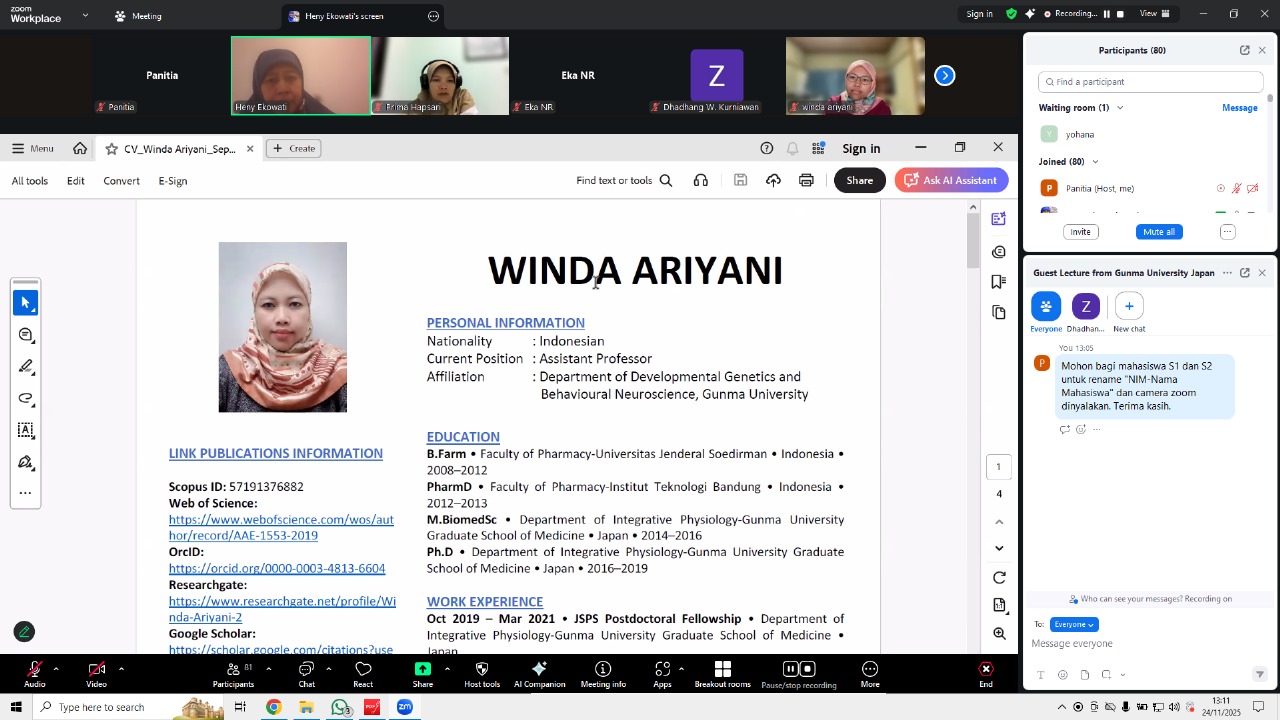
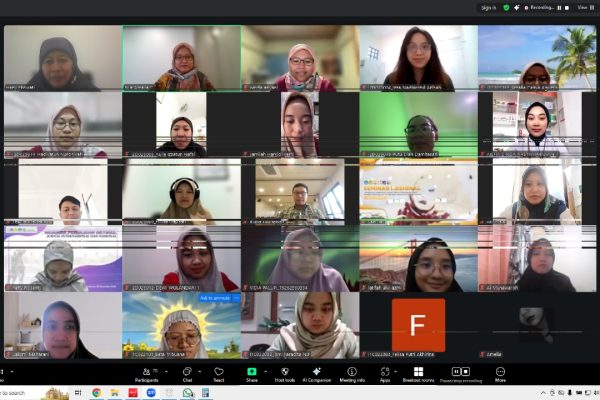
Pada hari Senin, telah dilaksanakan kuliah tamu yang menghadirkan apt. Winda Ariyani Ph.D., Alumni Jurusan Farmasi Unsoed Angkatan 2008, yang saat ini bekerja sebagai Assistant Professor di Department of Developmental Genetics and Behavioural Neuroscience, Gunma University, di Jeang. Kuliah tamu ini mengangkat tema tentang Tinjauan Farmakogenomik pada Kondisi Obesitas dan dimoderasi oleh Dosen Farmasi Unsoed, Heny Ekowati, Ph.D.
Salah satu pembahasan utama dalam kuliah tamu ini adalah terkait appetite/rasa lapar pada manusia. Mengapa Kita Sulit Berhenti Makan? Pernahkah kita bertanya-tanya mengapa ada orang yang sangat mudah merasa lapar, sementara yang lain bisa dengan mudah berhenti makan? Selama ini kita sering menganggap obesitas hanyalah masalah kurang gerak atau pola makan yang buruk. Namun, sains terbaru mengungkapkan bahwa jawabannya jauh lebih dalam, tersembunyi di dalam instruksi genetik dan sirkuit saraf di otak kita. Pembahasan ini disinggung oleh pembicara yang mendalami bidang neuroscience
Farmakogenomik: Bukan Sekadar DNA, Tapi Cara Tubuh Merespons
Pada awal mula ditemukan dan dikembangkannya pembahasan tentang DNA, kita mengira takdir kesehatan kita sepenuhnya ditentukan oleh urutan DNA yang kita warisi. Namun, di era farmakogenomik modern—seperti yang sudah diterapkan secara maju di Jepang—kita belajar bahwa yang terpenting adalah bagaimana tubuh kita “membaca” instruksi tersebut. Bukan hanya soal gen apa yang Anda miliki, tapi bagaimana lingkungan dan metabolisme memicu atau mematikan gen tersebut tanpa mengubah urutan dasarnya. Inilah yang disebut dengan perubahan epitranskriptomik, sebuah saklar molekuler yang menentukan bagaimana otak kita berfungsi.
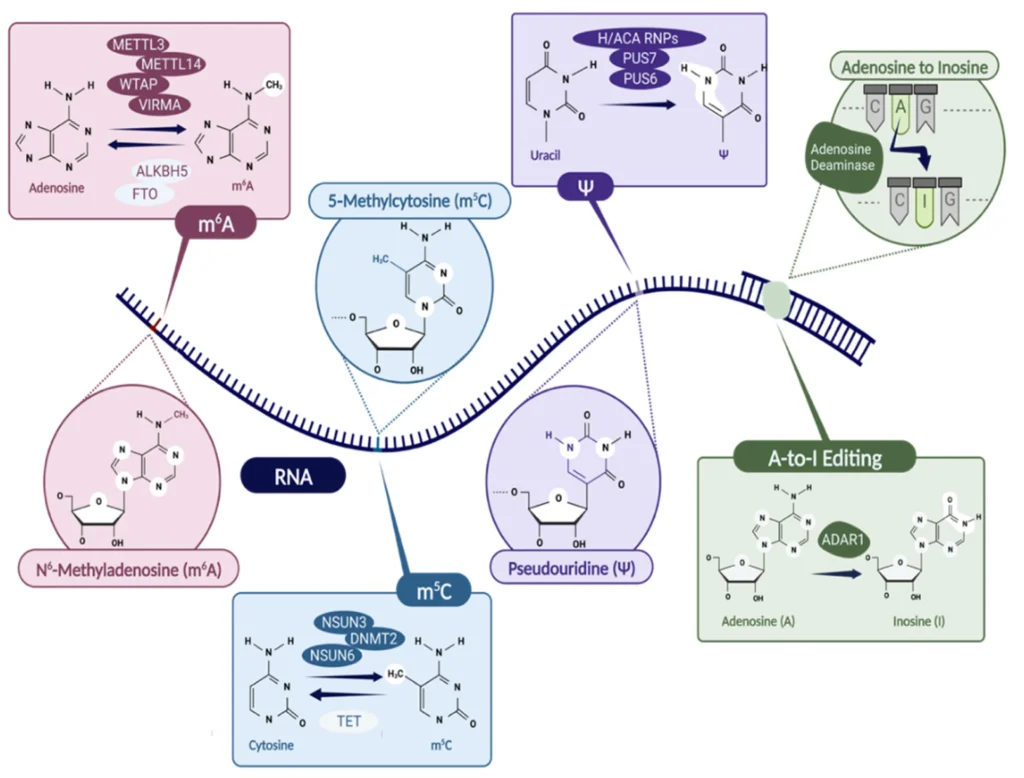
Gambar 1. Contoh modifikasi Epitranskriptomik epitranskriptomik : N6-metiladenosin (m6A), 5-metiladenosin (m5C), pseudouridin (Ψ), dan pengeditan A-ke-I (Wanowska dkk. 2022).
Dopamin: Saat Makan Menjadi Fokus Utama
Selain mekanisme molekuler di atas, otak kita memiliki sirkuit khusus yang mengatur seberapa fokus kita saat makan. Riset terbaru menemukan bahwa sekelompok sel saraf di area otak bernama PVH TH (Paraventricular Hypothalamus, Thyrothrophin-Releasing Hormone). sel tersebut berada di area paraventrikular hipotalamus, bagian dari otak/hipotalamus, yang salah satu fungsinya erat kaitannya dengan appetite/rasa lapar. Aktivasi sel ini menyebabkan pengiriman pesan ke bagian otak lain menggunakan Dopamin, yang identik dengan perasaan senang. Aktivasi saraf tersebut membuat kita tidak lagi mencari-cari makanan secara acak, melainkan menjadi sangat fokus pada proses mengonsumsi makanan yang ada di depan mata. Faktor ini yang menjelaskan mengapa terkadang kita merasa begitu “terobsesi” untuk menghabiskan makanan meskipun mungkin perut sudah hampir penuh. Para ilmuan mengetahui dan mengevaluasi hal ini dengan cara Fiber Photometry, yang memungkinkan peneliti melihat sel otak menyala secara real-time saat makan, atau Chemogenetics – Designer Receptors Exclusively Activated by Designer Drugs (DREADDs), yaitu cara “meremot” aktivitas sel otak tertentu menggunakan molekul kimia khusus untuk melihat dampaknya pada perilaku.
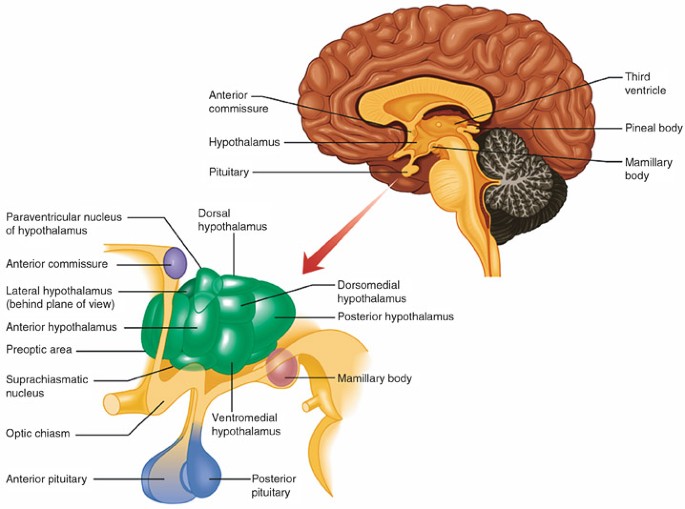
Gambar 2. Gambar Skematik yang menunjukkan Bagian Paraventrikular dari Hipotalamus, bagian dari Hipotalamus (Gao, 2009)
FTO: Sang “Saklar Lapar” di Hipotalamus
Salah satu key person/ titik utama dalam hal ini adalah adanya keberadaan gen bernama FTO (Fat Mass and Obesity-associated), yang seringkali dikenal sebagai “gen obesitas”. Mari kita buat sedikit analogi untuk memudahkan pembahasan terkait hal ini. Di dalam pusat kendali lapar di otak kita (hipotalamus), terdapat protein FTO yang bekerja seperti editor film. Ia melakukan proses yang disebut Alternative Splicing. Analoginya, anggaplah DNA adalah sebuah pita film. Saat kita lapar, FTO menjadi sangat aktif dan memutuskan untuk memasukkan satu adegan penting (Exon 13) ke dalam pita tersebut. Hasilnya adalah protein KIF1A yang sangat aktif.
Protein ini bekerja seperti truk pengangkut yang mengirimkan paket-paket “sinyal lapar” ke seluruh otak, membuat nafsu makan kita melonjak dan berat badan naik. Sebaliknya, saat kita kenyang, adegan penting tersebut dibuang (skipping), truk pengangkut menjadi tidak aktif, dan sinyal lapar pun berhenti.
Memahami obesitas melalui kacamata farmakogenomik dan neurosains menyadarkan kita bahwa perilaku makan adalah hasil interaksi rumit antara genetik dan sirkuit saraf otak. Penemuan ini memberikan harapan besar: di masa depan, penanganan obesitas tidak lagi hanya soal saran “makan lebih sedikit, olahraga yang teratur, mengatur pola konsumsi dan membatasi kalori”. Dengan Demikian, kita dapat mengembangkan terapi yang sangat presisi yang menargetkan mekanisme molekuler di otak, membantu setiap orang mendapatkan keseimbangan metabolisme yang lebih baik.
Referensi Gambar
Gao, Q., Horvath, T. (2009). Hypothalamus. In: Binder, M.D., Hirokawa, N., Windhorst, U. (eds) Encyclopedia of Neuroscience. Springer, Berlin, Heidelberg. https://doi.org/10.1007/978-3-540-29678-2_2322
Wanowska, E.; McFeely, A.; Sztuba-Solinska, J. The Role of Epitranscriptomic Modifications in the Regulation of RNA–Protein Interactions. BioChem 2022, 2, 241-259. https://doi.org/10.3390/biochem2040017